
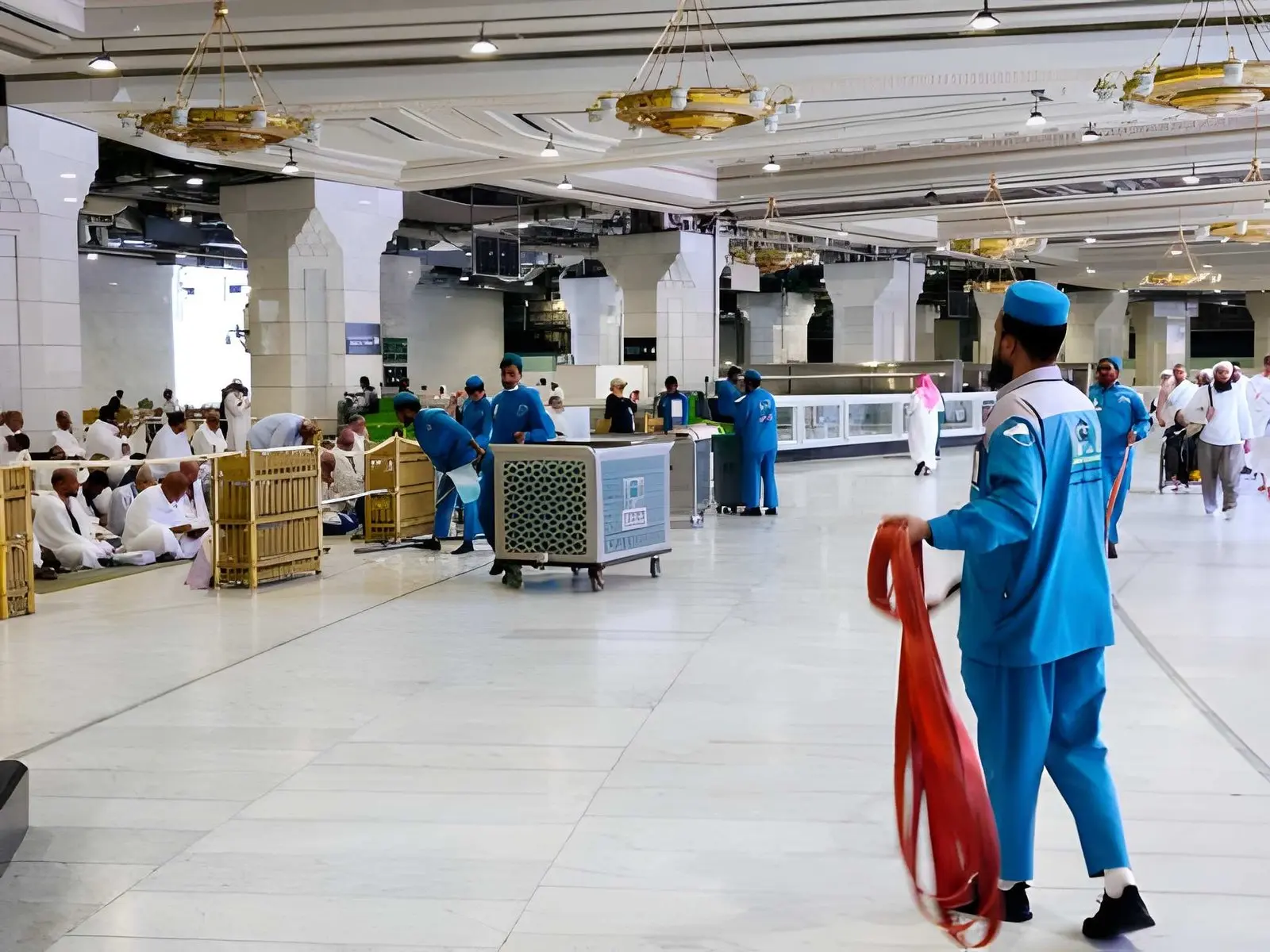
Makkah is experiencing an unusual Ramadan season in which strong religious demand is colliding with regional travel disruption. The result is a city managing two realities at once: expanded pilgrim services inside the holy sites and softer hotel demand in parts of the accommodation market.
That is what makes Makkah Services a timely topic. The story is no longer only about hospitality or worship logistics on their own. It is about how support systems, transport conditions, and booking behaviour interact when a major religious destination stays active through regional stress.
Around-the-clock services at the holy sites
The service side of the picture is clear. Authorities are maintaining a continuous operating model through two main guest care centres and 19 subsidiary centres across the Grand Mosque and the Prophet’s Mosque. These centres are designed to solve practical problems that shape the pilgrim experience far more than grand announcements do.
Support for older visitors and people with disabilities remains a priority. So does care for lost children, a service that combines welfare, reassurance, and crowd management. Luggage storage and QR-based wayfinding also help reduce friction inside highly congested worship environments.
These details matter because pilgrimage quality is often determined by small operational moments: how quickly a visitor finds help, how safely a child is reunited with family, or how easily someone with mobility challenges can navigate a crowded site.
Why hotel prices have softened this year
At the same time, the city’s hotel market has behaved differently from a typical Ramadan peak. Reporting tied to Makkah News shows that regional tension and aviation disruption have reduced some international arrivals during the final ten days of Ramadan, usually one of the busiest periods of the year.
That shift has created rare price flexibility near the Haram. Some hotels that would usually sell out months in advance have been accepting late bookings, while direct booking rates have in some cases come in below platform prices. Occupancy pressure has not vanished, but the market has become less predictable and more segmented.
The decline does not appear to be uniform. Hotels serving longer-stay visitors from countries such as Turkey and Uzbekistan have remained steadier than properties more dependent on short-stay Gulf travelers. That distinction is important because it shows the city’s demand base is broader than one region or one travel pattern.
Pilgrimage demand remains strong underneath the disruption
The softer hotel market should not be mistaken for weak religious demand. Nearly 1.86 million people have crossed Makkah’s miqats during Ramadan according to official reporting, and field operations continue at scale. That suggests the issue is not a collapse in interest, but a disruption in routes, timing, and traveler mix.
Several factors explain why demand remains resilient:
- Umrah remains a high-priority spiritual journey for many Muslims.
- Domestic pilgrims can still stabilize part of the market.
- Saudi airspace and Jeddah’s operating continuity still provide access.
- Longer-stay visitors help support mid-range occupancy even when short-stay flows weaken.
This pattern fits wider global reporting on 2026 travel disruptions in the region, where route changes and airspace restrictions have created friction without fully shutting movement down.
What travelers can realistically take from this season
For pilgrims already in the Kingdom, this environment may create unusual value, especially through direct hotel booking and more flexible last-minute availability. For operators, the lesson is different. Service resilience inside the holy sites can offset stress, but it cannot fully cancel aviation shocks outside them.
For policymakers, Makkah offers a case study in layered resilience. Religious services, accommodation pricing, airport operations, and crowd management all need to function together. If one layer weakens, the others must absorb more pressure.
Sources
- Arab News: 24-hour services for pilgrims at Holy Mosques
- Arab News: Regional tensions spark rare hotel price falls in Makkah during Ramadan
- Saudi Press Agency figures on Ramadan crossings through Makkah miqats
- PBS NewsHour: regional flight disruptions affecting Gulf travel in 2026
Conclusion
This Ramadan, Makkah is showing that a religious destination can remain operationally strong even when regional travel patterns become unstable. Services inside the holy sites have continued to expand, while the hospitality market has adjusted to fewer international arrivals and more selective demand. Together, those trends show a city still functioning at scale, but under a different set of pressures than usual.
Also Read
